Imagine a young child on the playground, eyes wide with excitement, but words stuck inside. They watch friends laugh and chase each other, yet feel left out in the noise and rush. Studies show that up to 25% of children with special educational needs (SEN) face social isolation during playtime because they can't communicate easily. 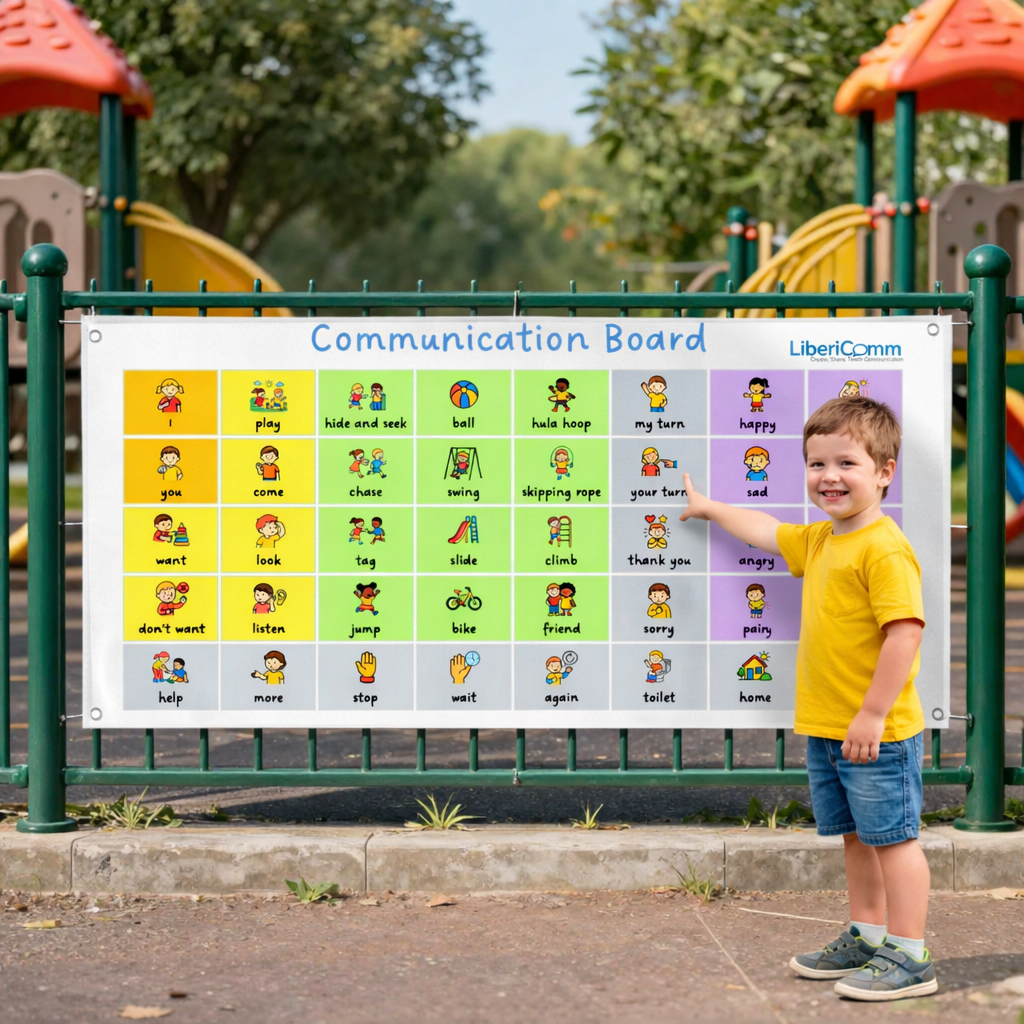
Augmentative and Alternative Communication (AAC) boards offer a simple fix. These tools use pictures and symbols to help non-verbal or minimally verbal kids express needs and ideas. In busy outdoor spots like playgrounds, they give SEN students a real voice amid the chaos.
This guide walks you through everything you need to pick, set up, and use playground communication boards for SEN students. You'll learn how they build true inclusion, boost social skills, and make playtime a place where every child belongs.
Understanding the Need: Why Playgrounds Require Dedicated AAC Solutions
Playgrounds buzz with energy. Kids run, shout, and play freely. For SEN students, this can overwhelm senses and block talk.
The Unique Challenges of Playground Environments for SEN
Noise from laughter and swings drowns out soft speech. Quick movements make it hard to focus or respond. A child with autism might shut down from the overload, while one with speech delays struggles to be heard over the wind.
Classroom boards work in calm rooms, but outdoors calls for tougher tools. Rain, sun, and dirt test them daily. Standard AAC methods fade in these spots, leaving kids silent.
Think of it like trying to whisper in a storm. Playground communication boards for SEN cut through that by staying clear and close by.
Legal and Educational Mandates for Accessibility
Laws push for equal play access. In the UK, the Equality Act 2010 demands schools remove barriers for disabled pupils. This includes playtime, not just lessons.
The SEND Code of Practice backs this too. It says every child must join the full school day, including breaks. Skipping playground aids breaks inclusion rules.
Schools that add these boards meet duties and avoid issues. They create fair spaces where SEN kids thrive alongside peers.
The Power of Unstructured Social Learning
 Play builds key skills. It teaches sharing, waiting, and solving fights without adults. For SEN students, communication boards unlock these lessons outdoors.
Without them, kids miss peer bonds. Boards let a child say "join me" or "stop that" with a point. This sparks real talks and fun.
Research from the National Autistic Society notes play aids emotional growth. Boards make that happen on the blacktop, not just inside.
Designing the Optimal Playground Communication Board
When choosing a playground communication board, many schools focus on durability and design — but cost and practicality are just as important.
Material Selection: Durability Meets Functionality
Outdoor communication boards are often made from rigid materials such as metal or high-density plastic, bolted into posts around the playground. While these can be effective, they are also expensive,
permanent and time-consuming to install.
For many schools, especially those just beginning their journey towards inclusive play, this can be a barrier.
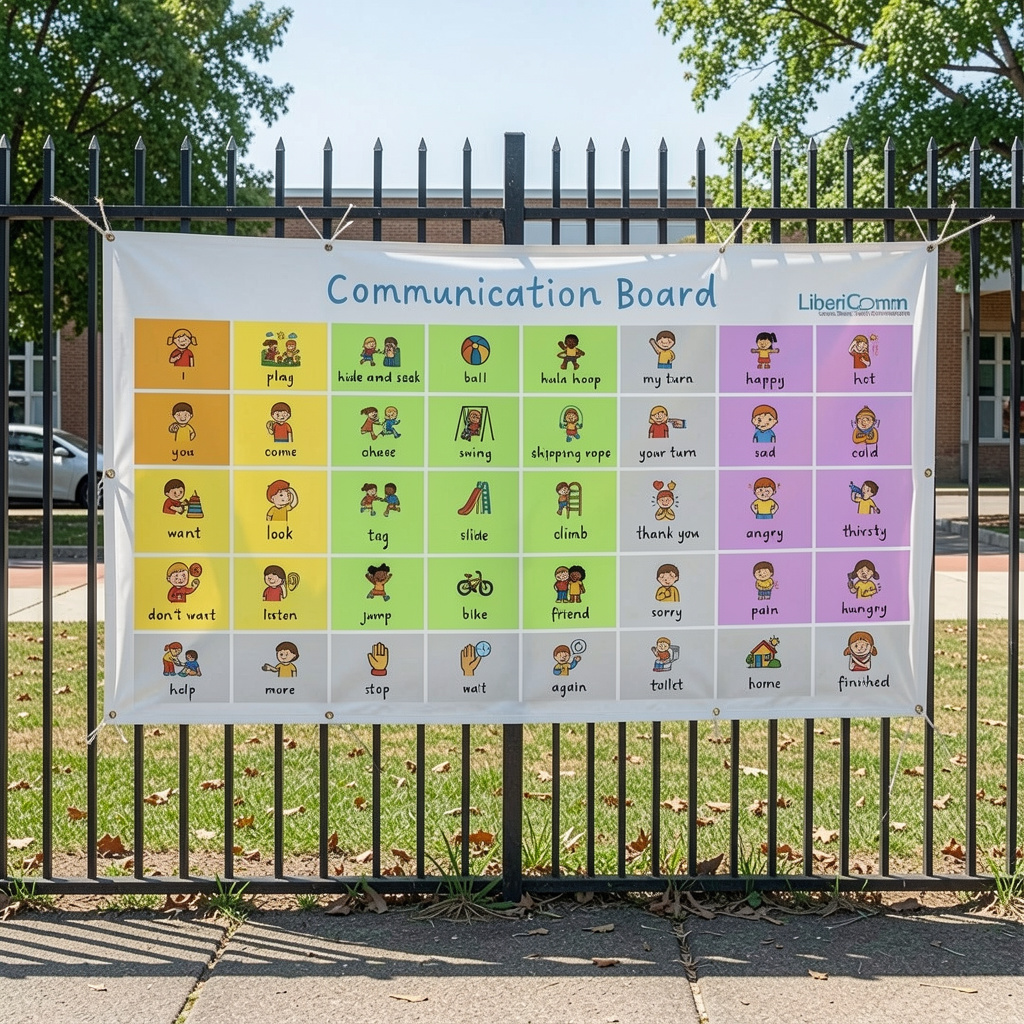
A more practical and cost-effective solution is the use of playground communication board banners, such as those offered by LiberiComm.
These banners are
-
significantly more affordable than fixed installations
-
quick and easy to set up using grommets and cable ties
-
waterproof and durable, designed for outdoor use
-
flexible, allowing you to move or replace them as needed
This makes them an ideal starting point for schools looking to introduce an outdoor communication board without committing to a large upfront investment.
In many cases, a banner provides everything needed to immediately improve communication during playtime — without the delays and costs associated with permanent fixtures.
Why Customisation Matters
One of the most overlooked aspects of a playground communication board is the vocabulary it includes.
Many pre-made boards use generic symbols that may not match your specific playground. While this might seem minor, it can significantly impact how effective the board is.
For example: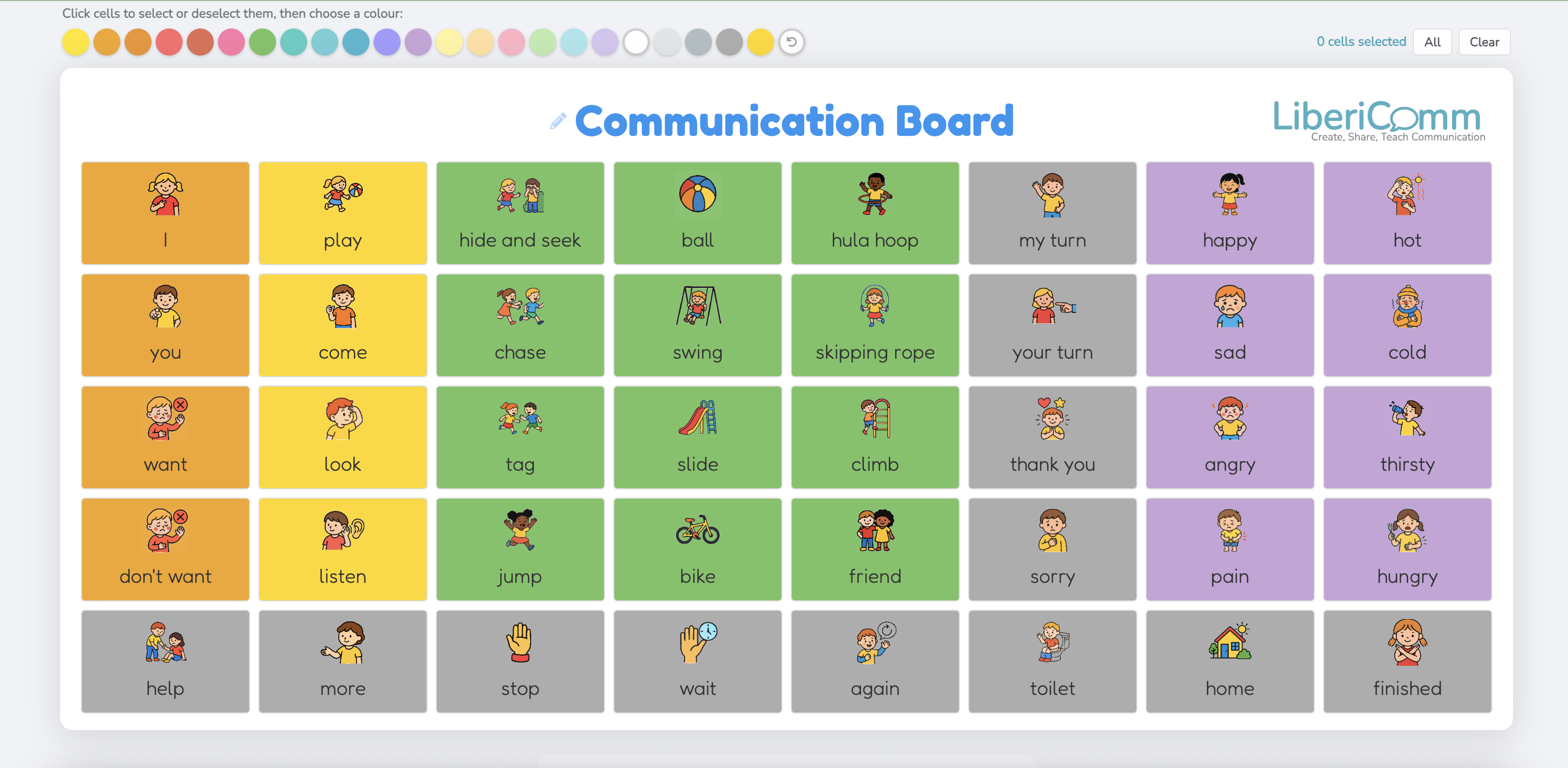
-
A child may request a swing when no swing is available
-
A symbol may not reflect the games children actually play
-
Vocabulary may not match the language used in your setting
-
For some pupils, particularly those with autism or emerging communication skills, this can be confusing or even discouraging. If a symbol does not lead to a real, tangible outcome, the child may stop using the board altogether.
This is why customisation is so important. LiberiComm offers a simple, easy-to-use tool that allows you to create your own playground communication board, tailored specifically to your environment.
You can:
-
select symbols that match your actual playground equipment
-
include vocabulary relevant to your pupils
-
adapt boards for different age groups or needs
-
update and refine boards over time
This ensures that every symbol has meaning and purpose, making communication more successful and more motivating for pupils.
A Practical Approach to Inclusion
Creating an inclusive playground does not have to involve large-scale installations or complex planning.
Sometimes, the most effective solutions are:
-
quick to implement
-
easy to adapt
-
closely matched to the needs of your pupils
A LiberiComm playground communication board banner provides exactly that — a flexible, affordable and highly effective way to support communication during playtime.
Rather than waiting for the “perfect” solution, schools can take a practical first step towards inclusion, and build from there.
Placement and Setup
Communication boards should be placed in areas where interaction naturally happens, such as near swings, climbing frames and open play spaces.
These are often the areas where communication breakdown happens — turn-taking, sharing and joining in with others.
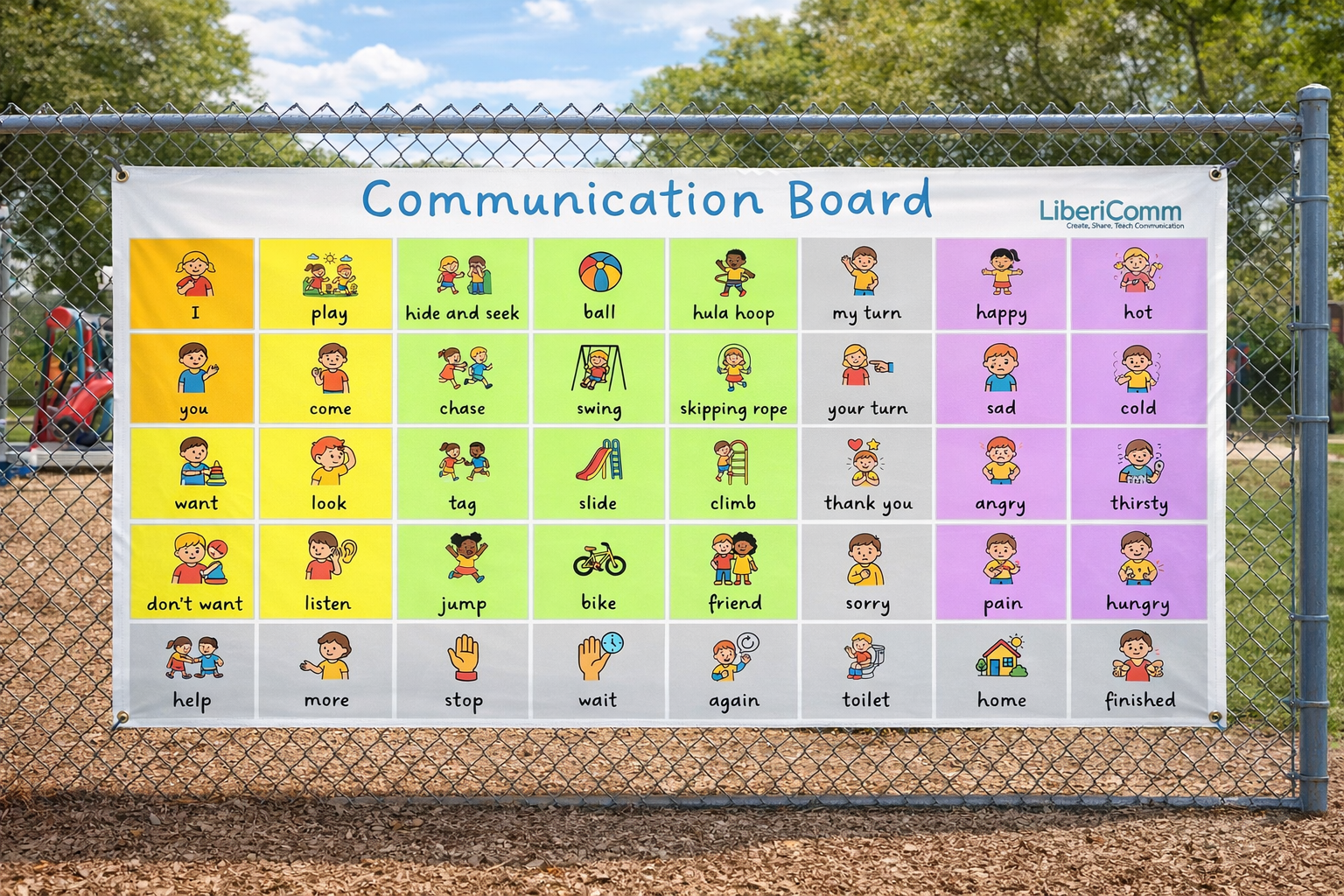 Unlike fixed boards that require installation, LiberiComm playground communication board banners can be quickly attached to fences using grommets and cable ties, making them easy to position, move or adapt as needed.
This flexibility allows schools to trial different locations and respond to how pupils actually use the board, rather than committing to a permanent setup too early.
In most playgrounds, two to four well-placed boards are enough to support communication across different play zones.
Accessibility and Mounting Height Standards
Heights fit all. Wheelchair users need 60-90 cm from ground. Standing kids reach 100-120 cm.
Angle boards to dodge sun glare. Tilt slightly forward. Use adjustable mounts for tweaks.
Check paths around. No blocks for wheelchairs or quick runs. Standards from the British Standards Institution guide safe heights.
Everyone accesses with ease. This inclusive touch makes playgrounds welcoming.
Training Staff and Fostering Peer Engagement
Staff lead the way. Without consistent modelling, even the best communication board will sit unused. When adults actively use the board during playtime, pupils quickly learn that it is a meaningful and reliable way to communicate.
Empowering Educators: Modelling and Prompting Techniques
The key is simple: show, don’t just tell.
Point to a symbol while speaking, for example “want slide?” or “my turn”. Pupils begin to copy this naturally over time.
Allow time for processing. After modelling, pause and give pupils the opportunity to respond by pointing. This builds confidence and reduces pressure.
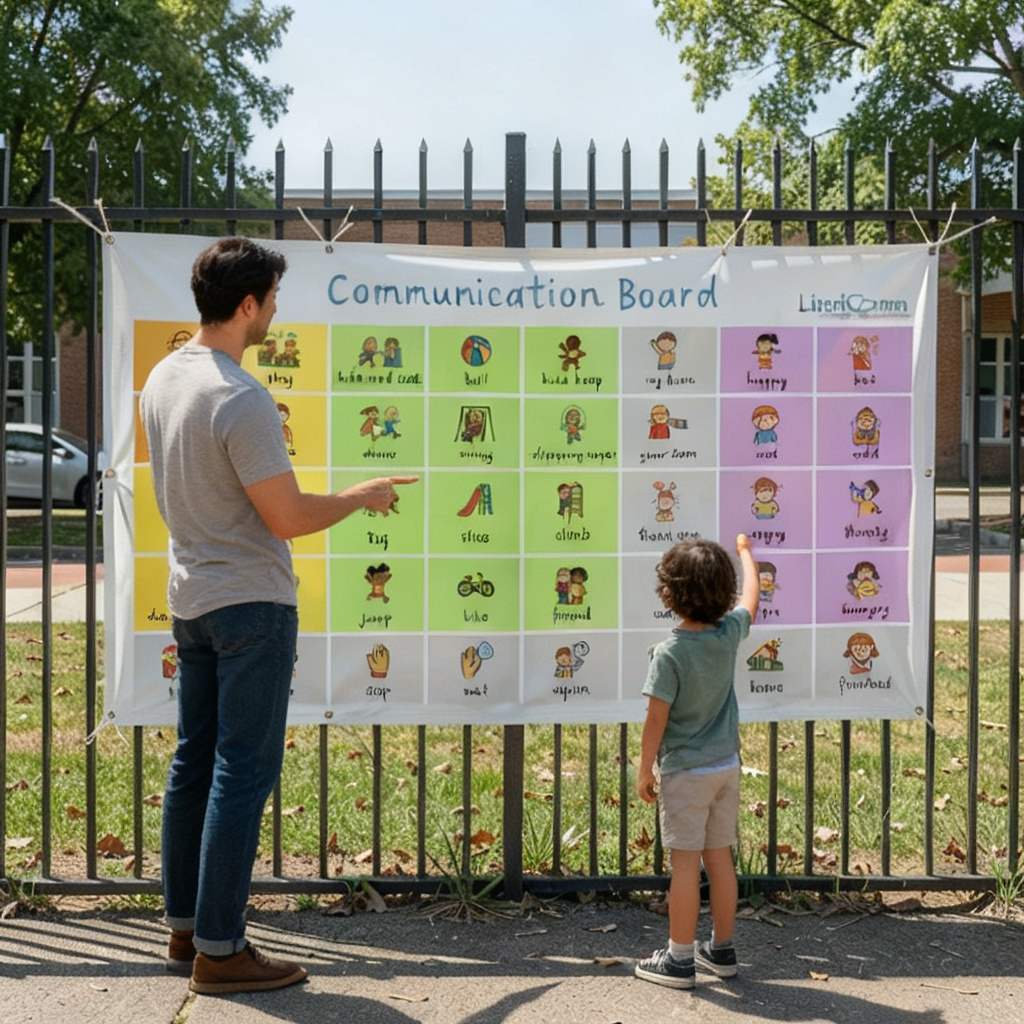 If a child becomes frustrated, gently redirect them to the board:
👉 “Show me on here.”
Consistency is what makes the difference. When used regularly, the board becomes part of everyday play, not an added extra.
Simple expectations for staff:
-
model use during playtime daily
-
praise attempts to use the board
-
respond consistently to communication
Supporting Peer Interaction
One of the most powerful outcomes of a playground communication board is the way it supports interaction between pupils.
Children can:
-
invite others to play
-
take turns choosing activities
-
respond to each other using shared symbols
Adults can support this by encouraging pupils to use the board together, rather than always stepping in.
For example:
👉 “Ask them using the board”
👉 “Show them what you want to play”
This helps move communication from adult-led to peer-led, which is where real inclusion happens.
Maintenance and Ongoing Use
Playground communication boards need to be easy to maintain in order to remain effective.
With LiberiComm communication board banners, this is straightforward:
-
wipe clean when needed
-
check attachments (grommets and ties) regularly
-
reposition boards if a better location is identified
Because banners are flexible and cost-effective, they can be updated or replaced without the need for major changes to the playground.
Measuring Impact
The impact of a playground communication board is often seen quickly.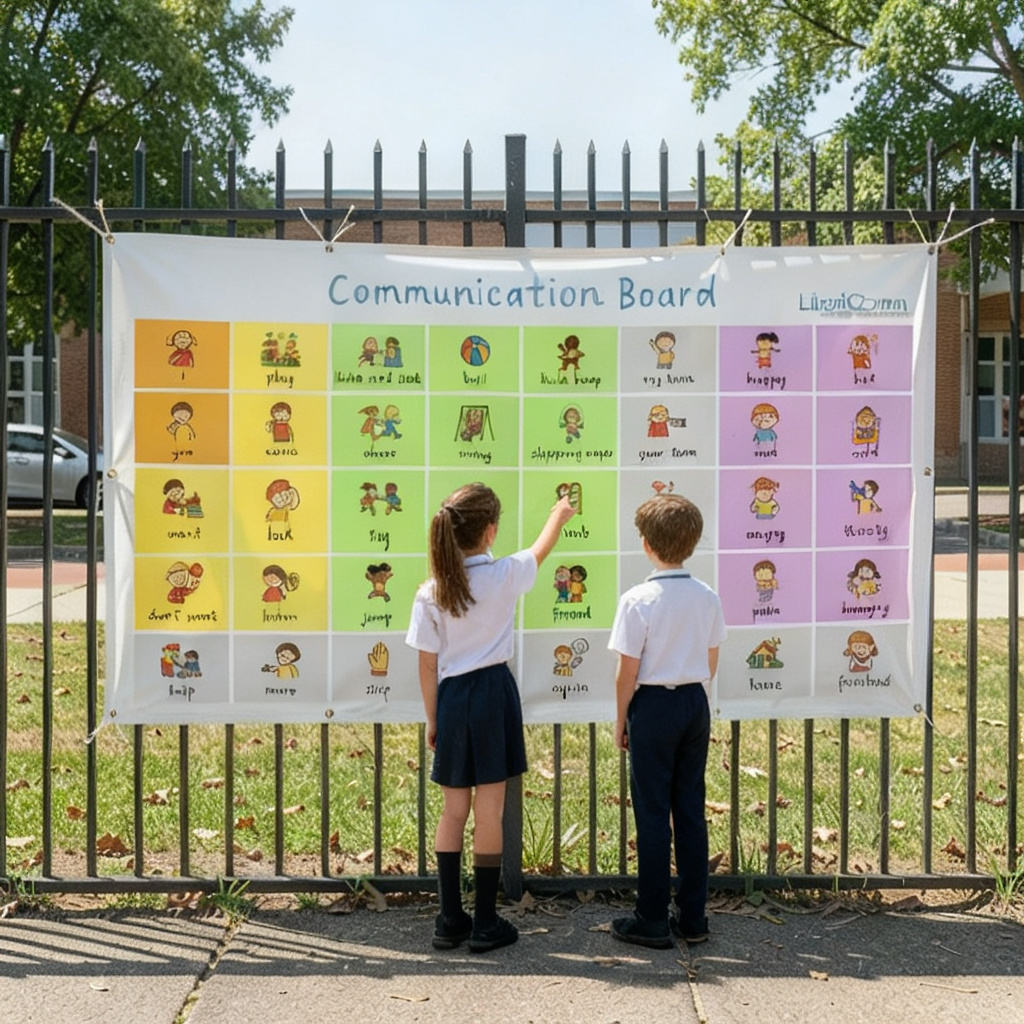
Schools commonly notice:
-
increased participation during playtime
-
more frequent peer interaction
-
reduced frustration linked to communication barriers
-
greater independence
Even small moments — such as a child successfully requesting a turn or joining a game — represent meaningful progress.
A Real Example
In one UK primary school, a LiberiComm playground communication board banner placed near the climbing frame led to increased interaction during playtime.
A non-verbal pupil began using the board to request help and join in activities. Over time, this led to more frequent engagement with peers and greater confidence in social situations.
Long-Term Benefits
Outdoor communication boards support: 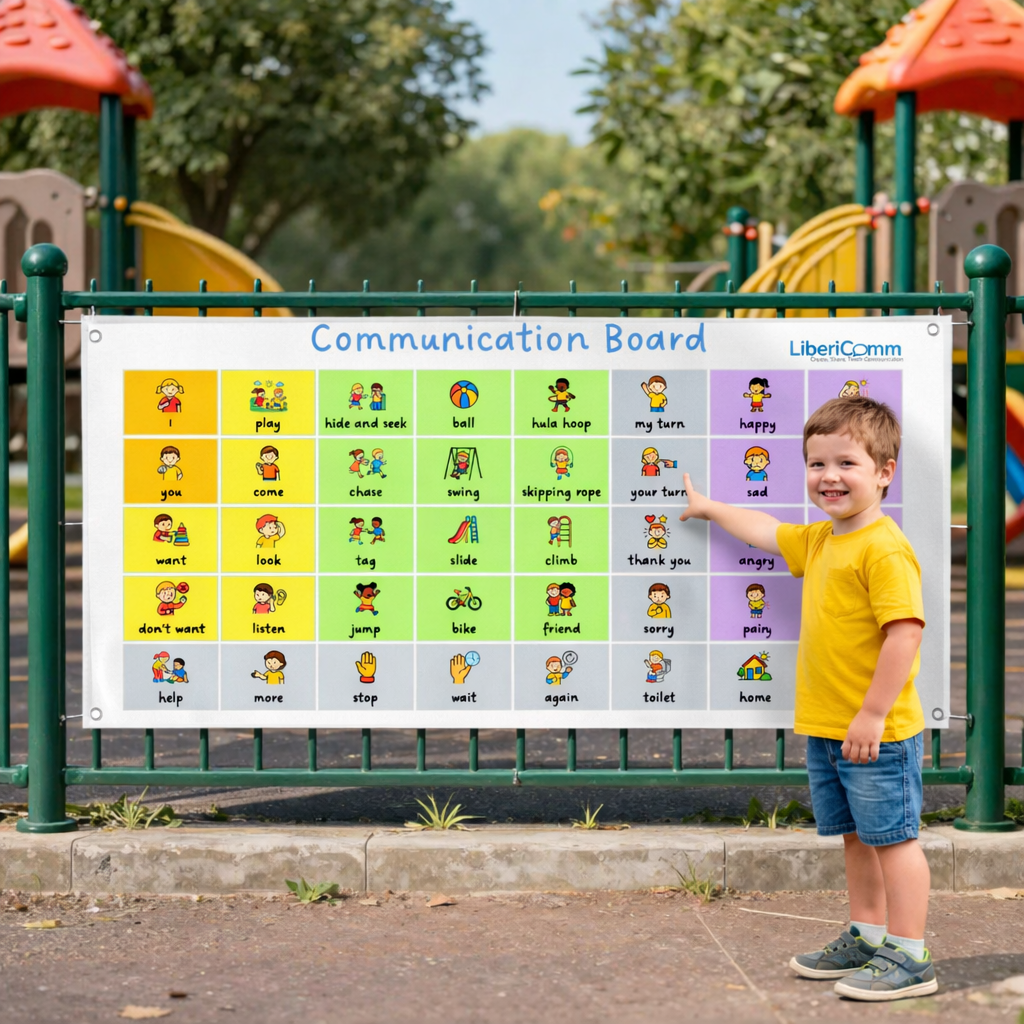 Playground Communication Board, AAC Visual Aid for Autism and SEN, Speech Therapy Outdoor Display 3x6ftThe LiberiComm Playground Communication Board Banner is designed to support children’s communication in outdoor settings. This large AAC banner helps children rSee details →
- language development
-
social interaction
-
emotional wellbeing
-
independence
Most importantly, they help children feel included — not just in lessons, but in everyday play.
Final Thoughts
Playground communication boards are a simple but powerful way to support inclusive play. Solutions such as LiberiComm communication board banners offer a flexible, affordable and practical way for schools to introduce communication support without complex installation.
Creating an inclusive playground does not need to be complicated. Sometimes, it starts with something simple — giving every child a way to be heard.