For many children, learning to build sentences can feel overwhelming. Knowing individual words is one thing — combining them into meaningful sentences is another.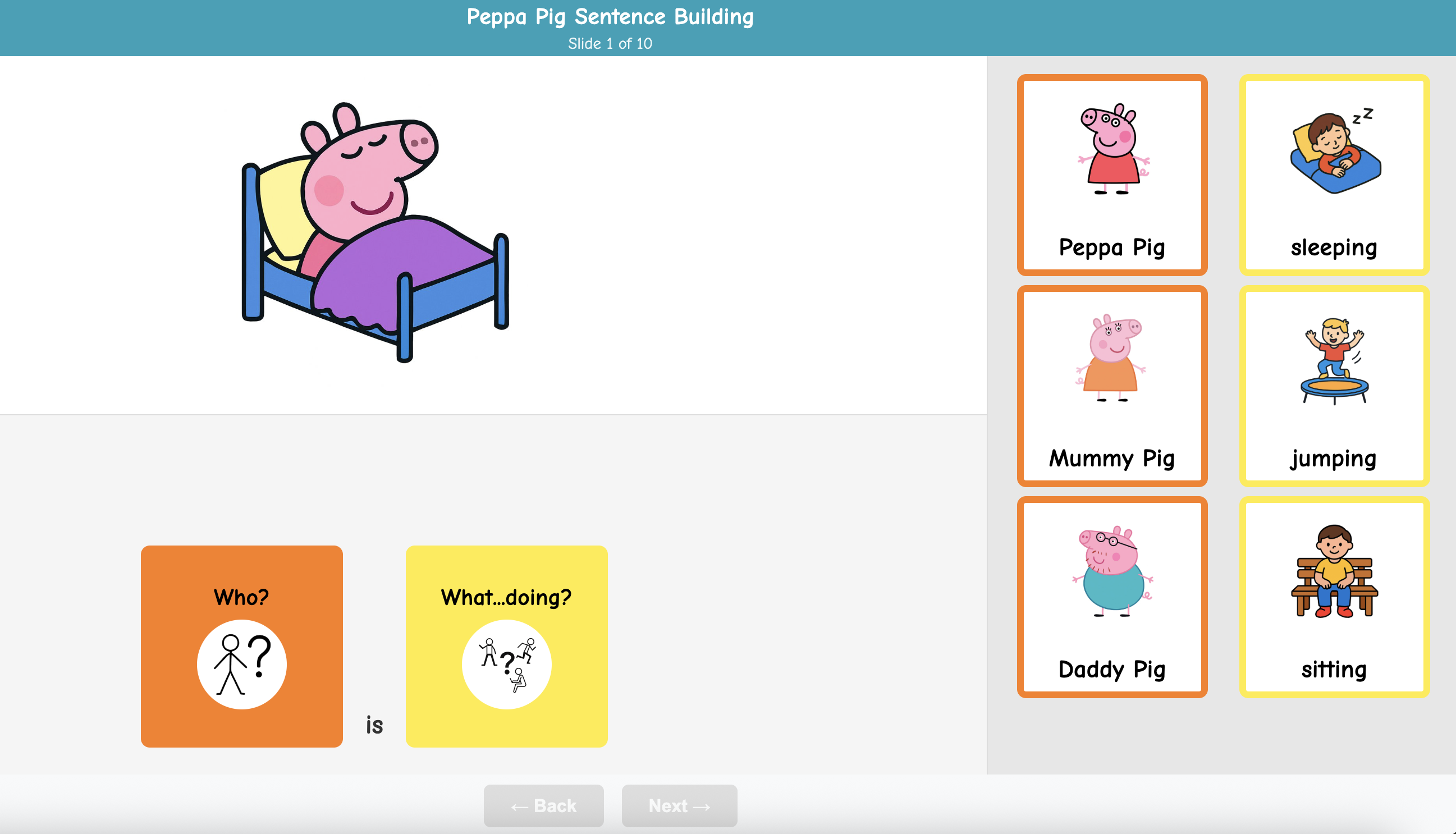
Visual sentence-building approaches have been widely used in schools to support this process. One well-known example is Colourful Semantics, which uses colour to break sentences into manageablenparts.
LiberiComm is inspired by these structured approaches, but offers something more flexible — allowing schools to adapt sentence building to suit their own systems, preferences and pupils.
Why Visual Sentence Structure Works
Structured, visual approaches to sentence building help children understand how language fits together.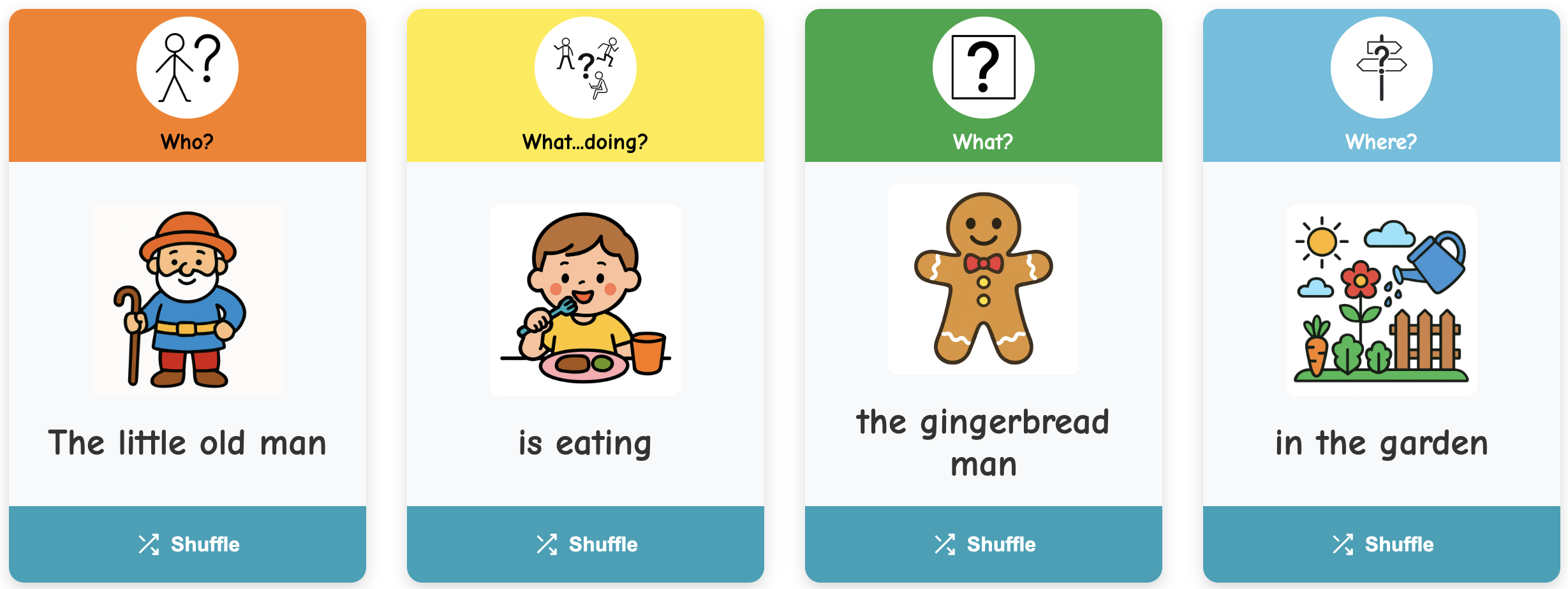
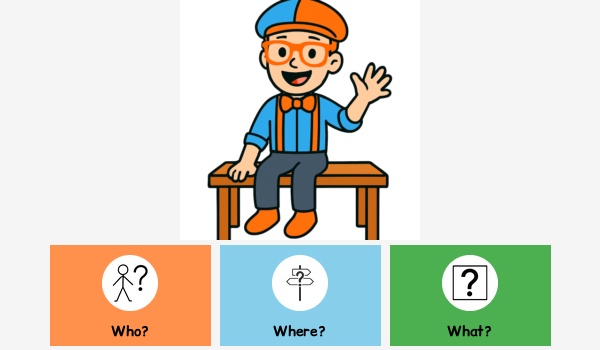
By breaking sentences into parts such as:
-
who
-
what doing
-
what
-
where
children can begin to see patterns in language, rather than guessing how sentences are formed.
This supports:
-
understanding of sentence structure
-
expressive language development
-
progression from single words to full sentences
Most importantly, it reduces cognitive load and makes language feel more achievable.
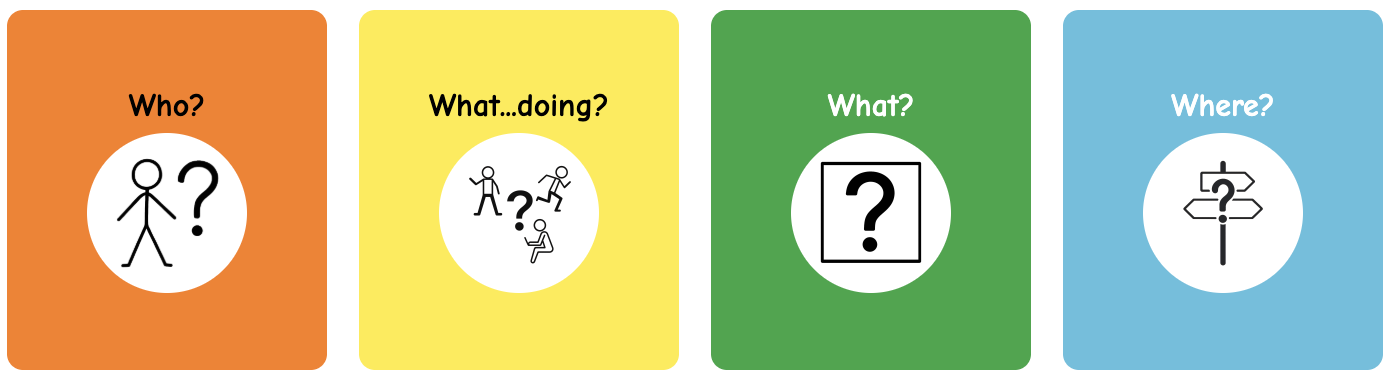
Inspired by Colourful Semantics
Many schools use Colourful Semantics, where each part of a sentence is linked to a specific colour. However, not all settings use the same system. LiberiComm is designed with this in mind. Instead of fixing you to one colour scheme, it allows you to: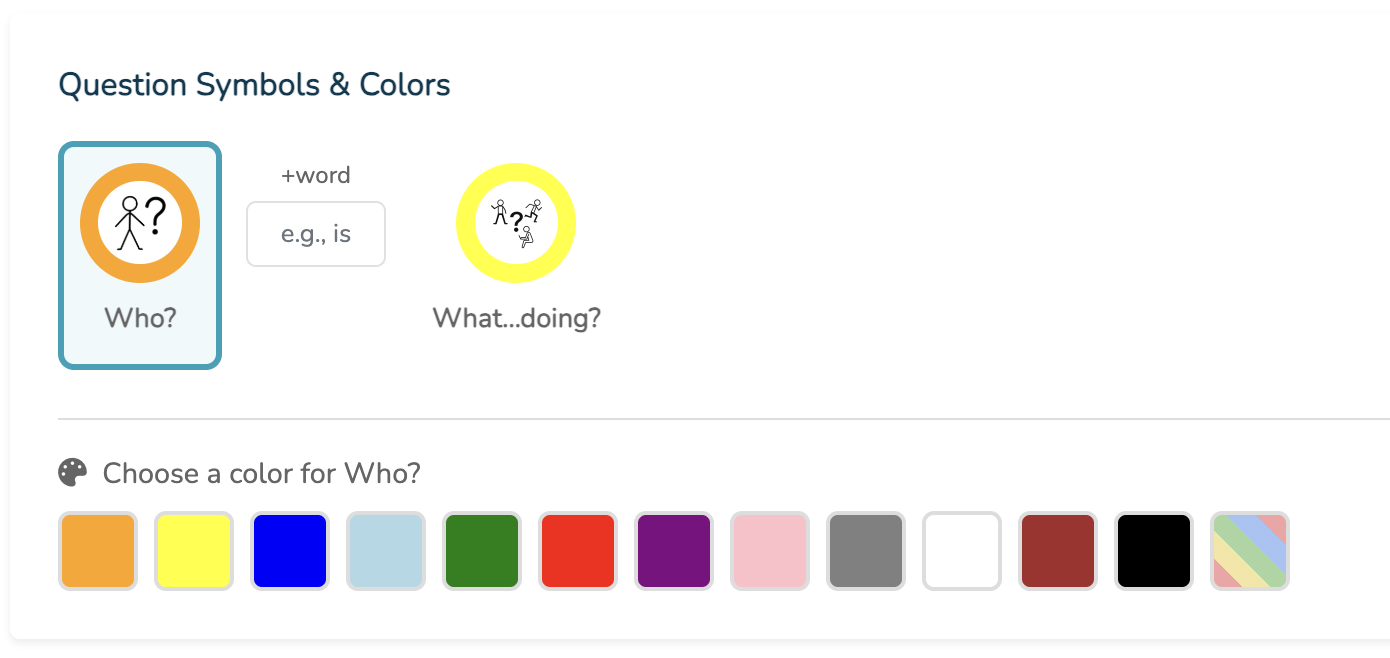
-
choose your own colours
-
match your school’s existing approach
-
adapt to different learners or systems
-
keep consistency across your setting
This flexibility means you can use the same structure you already teach, without needing to change your approach.
Flexible Use: Digital, Printable and Home Learning
One of the key advantages of LiberiComm is how flexible the sentence-building activities are.
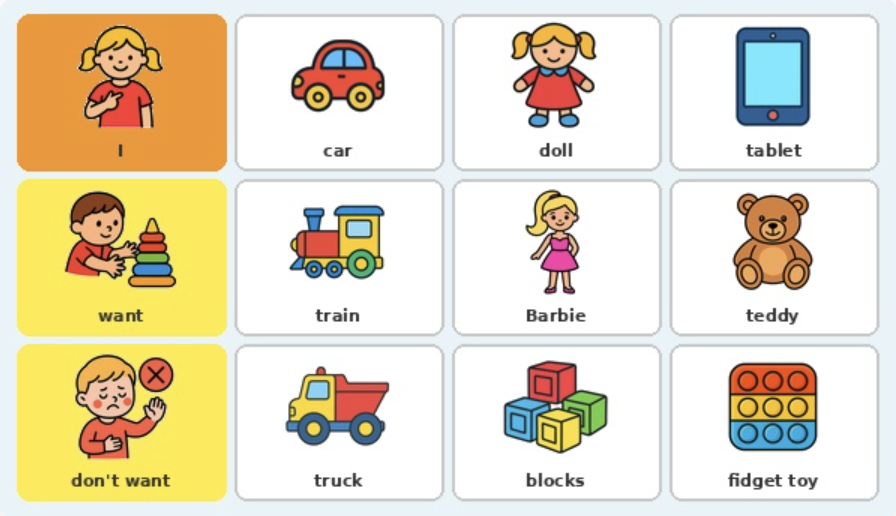
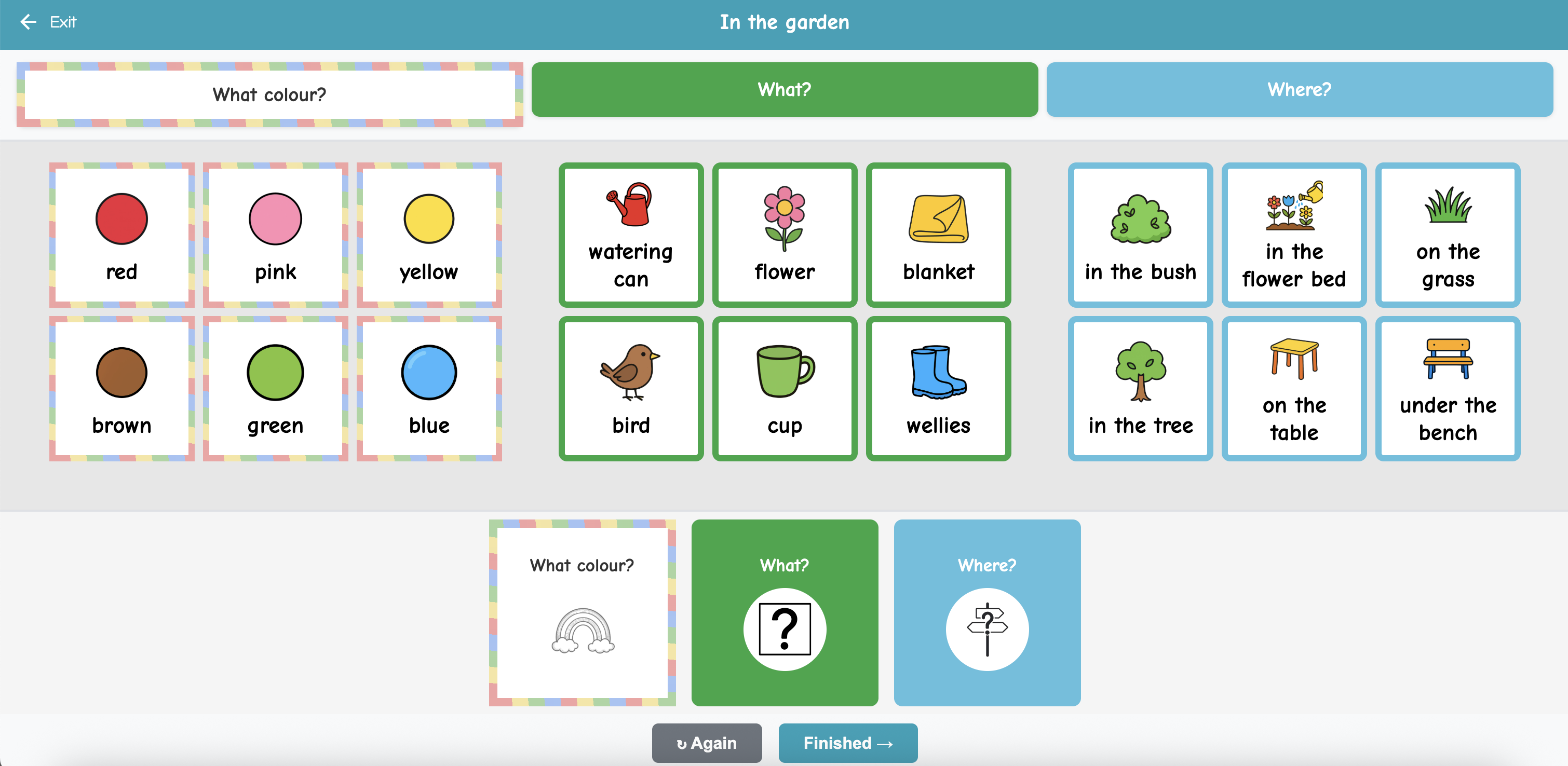
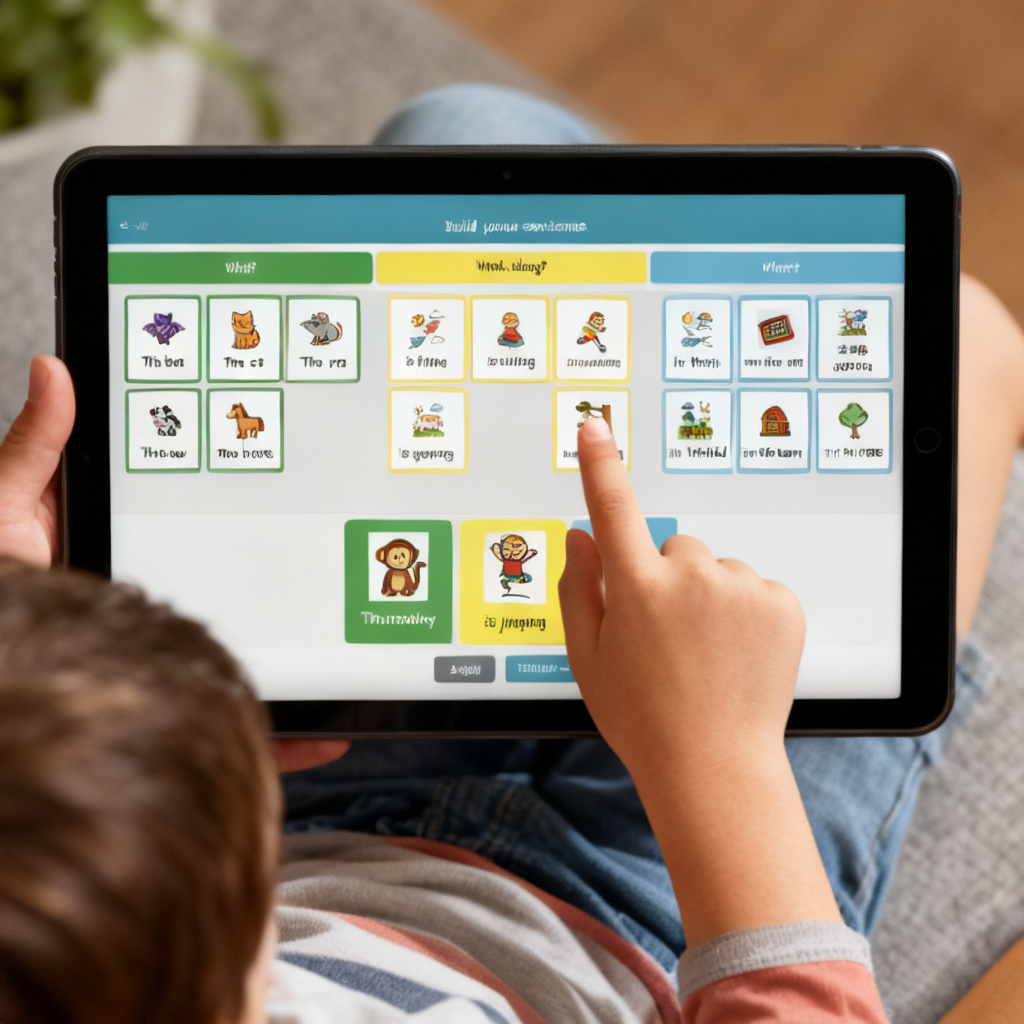
Activities can be used in a digital format, where pupils interact with symbols on a screen. When a symbol is selected, the word is read out loud, providing immediate auditory feedback. This supports understanding, reinforces vocabulary and helps develop spoken language.
Digital boards can be used on:
-
iPads and tablets
-
classroom computers
-
interactive whiteboards
This makes them easy to integrate into whole-class teaching, small group work or individual sessions.
LiberiComm activities can also be printed, allowing you to create hands-on resources. These can be used as cut-and-stick activities, helping pupils physically build sentences by matching symbols to question prompts. This is particularly effective for learners who benefit from tactile, structured tasks.
In addition, each activity can be assigned directly to a pupil, allowing them to access it at home. This provides a simple and effective way to set engaging homework for pupils with SEND, while maintaining consistency between school and home.
Building Sentences with LiberiComm
LiberiComm provides a simple way to create structured sentence-building activities.
Children can:
-
select each part of a sentence step by step
-
see how the sentence is built visually
-
hear words spoken aloud on digital versions
-
build sentences in a clear, guided way
Because the structure is visual, children are supported at every stage of the process.
A Structured Progression for Sentence Building
One of the strengths of LiberiComm is that sentence building is not left to chance. It follows a clear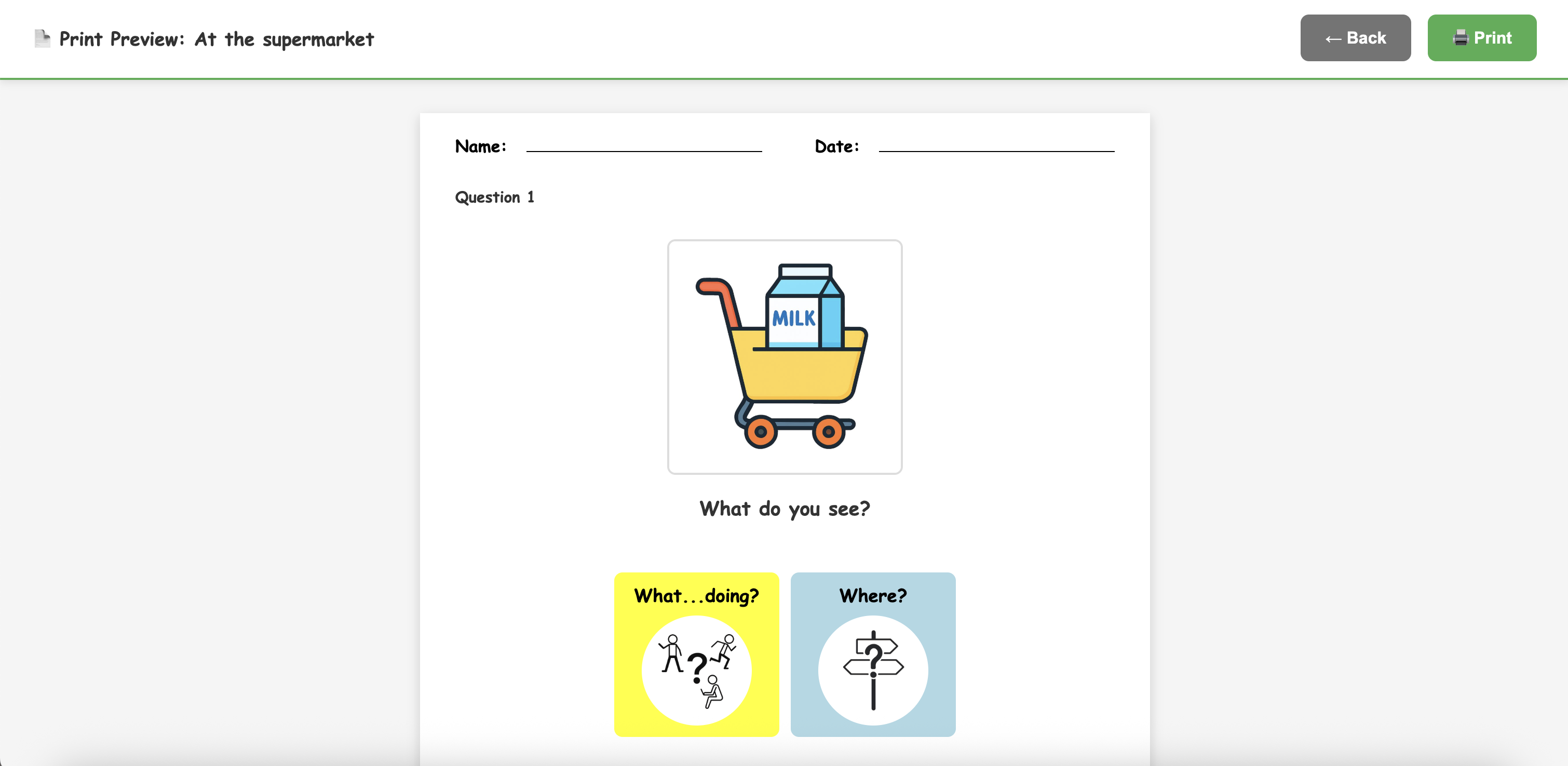 progression, supporting pupils as they move from single words to full sentences.
Rather than overwhelming learners, each stage builds on the previous one, gradually increasing complexity while keeping the structure consistent.
Early Sentence Building (Levels 1–3)
At the earliest stage, the focus is on understanding individual parts of a sentence.
In these levels, questions are introduced one at a time, helping pupils focus on a single idea before moving on.
-
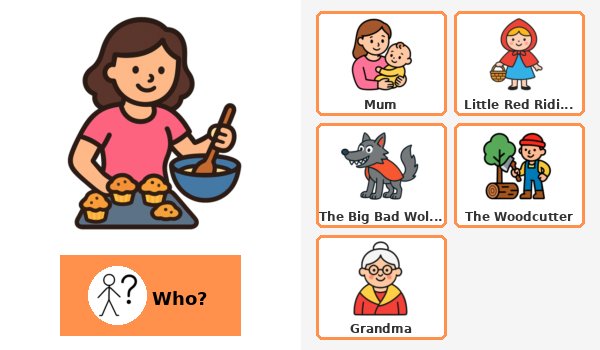
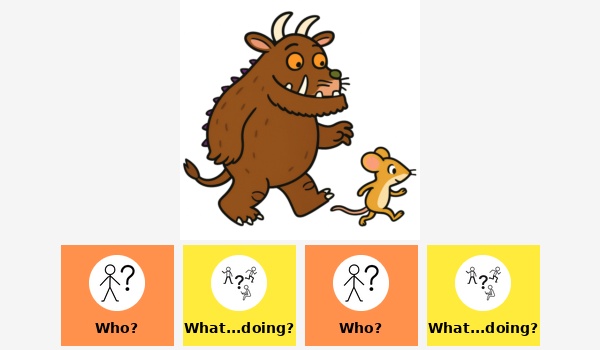
Level 1 uses one question (e.g. Who?) with answer choices shown individually.
-
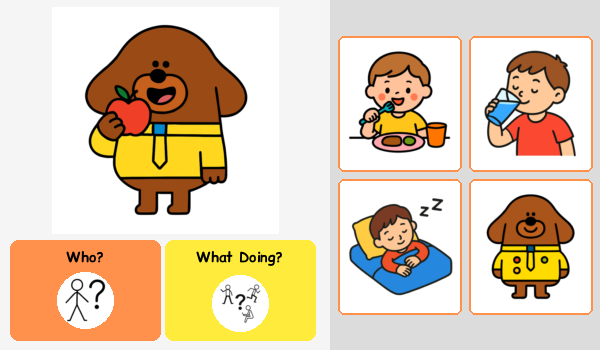
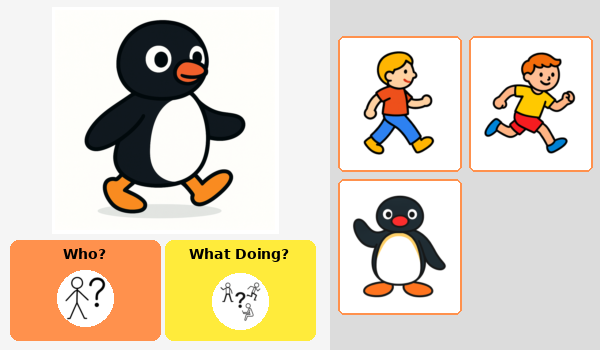
Level 2 introduces two questions (e.g. Who? + What doing?), but still presented one at a time.
-
Level 3 builds on this by introducing three questions, again shown sequentially.
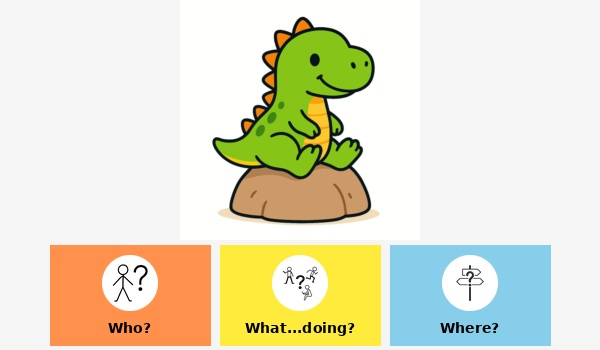
For example, a pupil might first answer:
👉 Who? → Peppa
Then:
👉 What doing? → sitting
By dragging each answer onto the question symbol, the child builds a simple sentence:
👉 Peppa sitting
This step-by-step approach reduces cognitive load and helps pupils clearly understand how sentences are formed.
Developing Sentence Builder (Levels 4–5)
Once pupils are confident with individual questions, the next stage introduces more independence.
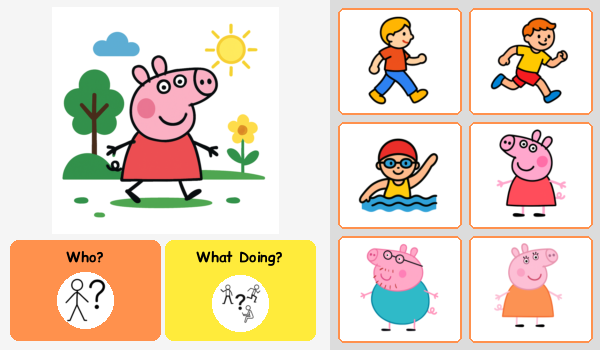
-
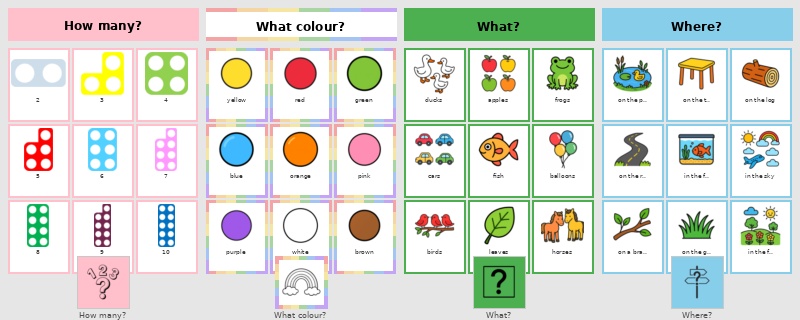
Level 4 presents two questions together, with all answer options visible.
-
Level 5 expands this to three questions, again with all answers available at once.
This shift encourages pupils to:
-
scan multiple options
-
make choices independently
-
begin forming sentences more fluently
The structure is still supported, but with less scaffolding than earlier levels.
Multi-Symbol Sentence Builder (Levels 6–7)
At this stage, sentence building becomes more interactive and flexible.
-
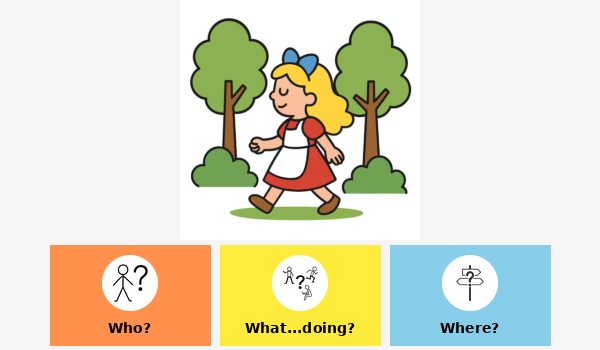
Level 6 – Sentence Shuffle
Pupils are presented with a sequence of words that can be rearranged. By selecting them, they are shuffled into different orders — sometimes creating funny or incorrect sentences. This helps develop understanding of word order and meaning.
-
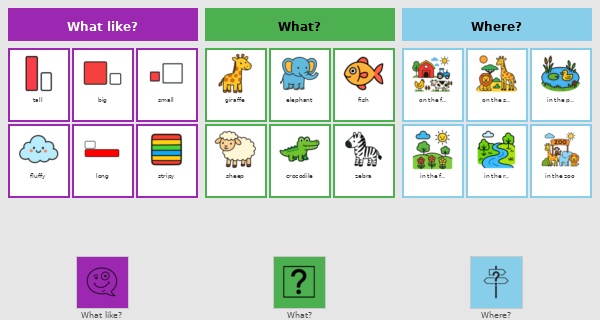
Level 7 – Choose and Build
Pupils begin to actively select words to build their own sentences. Rather than simply describing what they see, they are making purposeful choices about language.
This stage supports:
-
deeper understanding of sentence structure
-
experimentation with language
-
engagement through interactive tasks
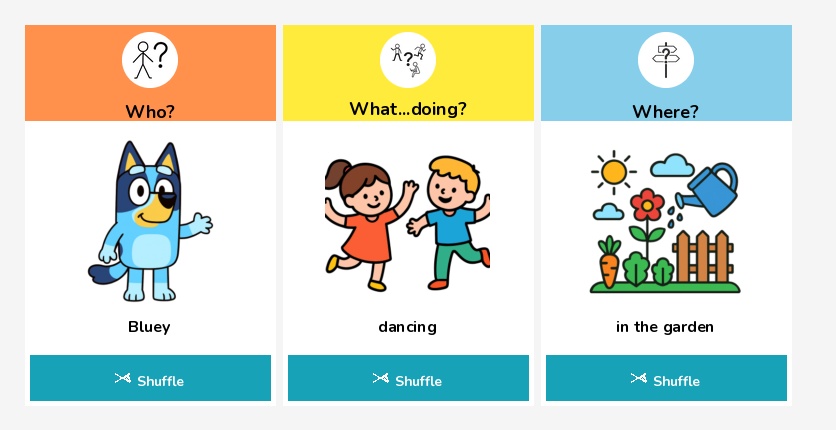
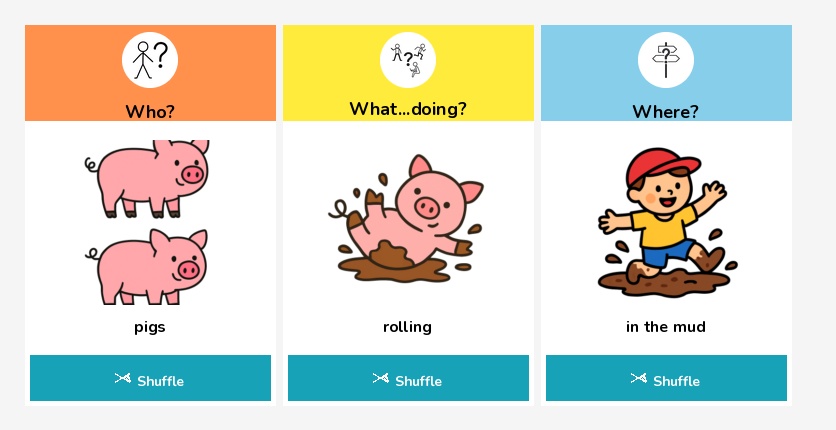
Advanced Sentence Builder (Levels 8–9)
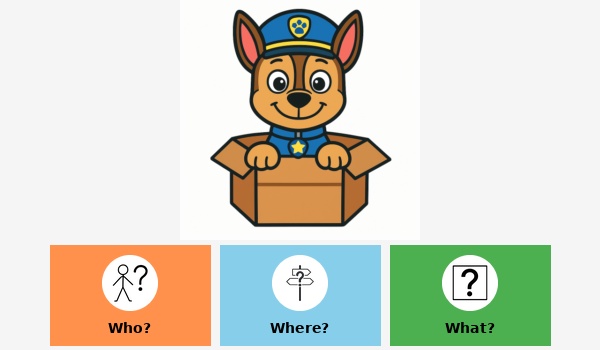
The final stage introduces more complex sentence structures using four parts:
👉 Who + What doing + What + Where
For example:
👉 The dog is eating a bone in the garden
-
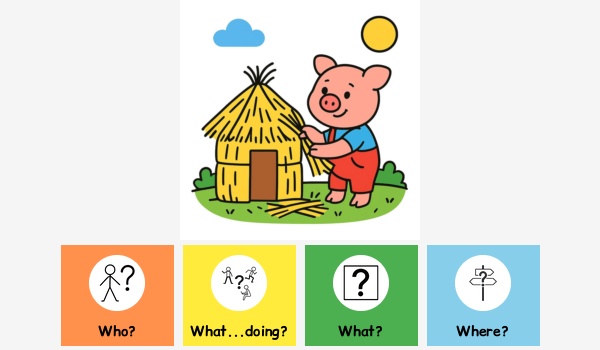
Level 8 – Describe and Build
Pupils describe images and construct four-part sentences.
-
Level 9 – Sentence Shuffle
Four-word sentences are rearranged, reinforcing understanding of correct order.
-
Level 9 – Choose and Build
Pupils independently select vocabulary to create full, meaningful sentences.
At this stage, pupils are not just building sentences — they are using language with purpose and understanding.
Why This Progression Works
This structured approach ensures that pupils are:
-
not overwhelmed
-
supported at every stage
-
gradually building independence
-
developing both understanding and expression
By moving from guided, step-by-step tasks to independent sentence building, pupils gain confidence and control over their communication.
Using Sentence Builders in Practice
Sentence-building activities can be used in a range of ways:
-
Adult modelling – demonstrating how sentences are built
-
Guided support – helping pupils select each part
-
Independent practice – allowing pupils to create their own sentences
-
Play-based learning – linking sentences to real activities
The key is consistency. When children see structured language used regularly, they begin to apply it themselves.
A Flexible Approach That Works for Your Setting
LiberiComm does not replace existing approaches — it works alongside them. Whether your school uses Colourful Semantics or another structured system, LiberiComm allows you to:
-
maintain consistency
-
adapt resources quickly
-
create personalised content
-
support a wide range of learners
This makes it a practical tool for classrooms, interventions and everyday communication.
Final Thoughts
Structured sentence-building approaches are powerful, but they need to be flexible to be effective in real classrooms.
LiberiComm provides a way to take those principles and apply them in a way that fits your setting, your pupils and your existing practice.
For children developing their language skills, this means one thing: a clearer, more accessible path to building sentences and expressing themselves with confidence.